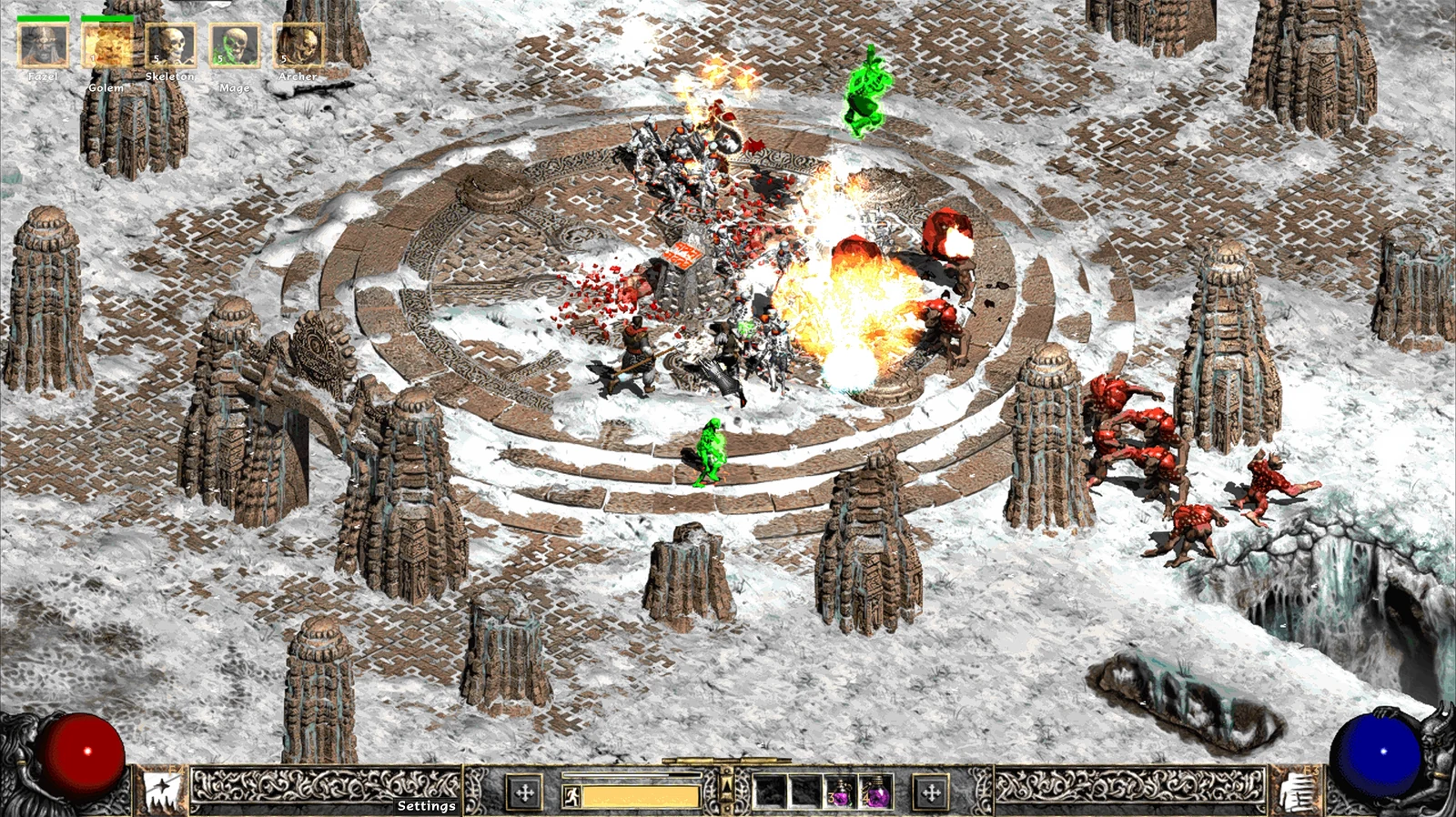
Inferno, Torment and Abyss
Three post-Hell difficulties extend character progression and raise enemy durability, damage and encounter pressure.
DEV D2 builds on Project Diablo 2 with a longer difficulty path, broader movement, endgame summoners, shared stash convenience and encounters designed to resist familiar routines.
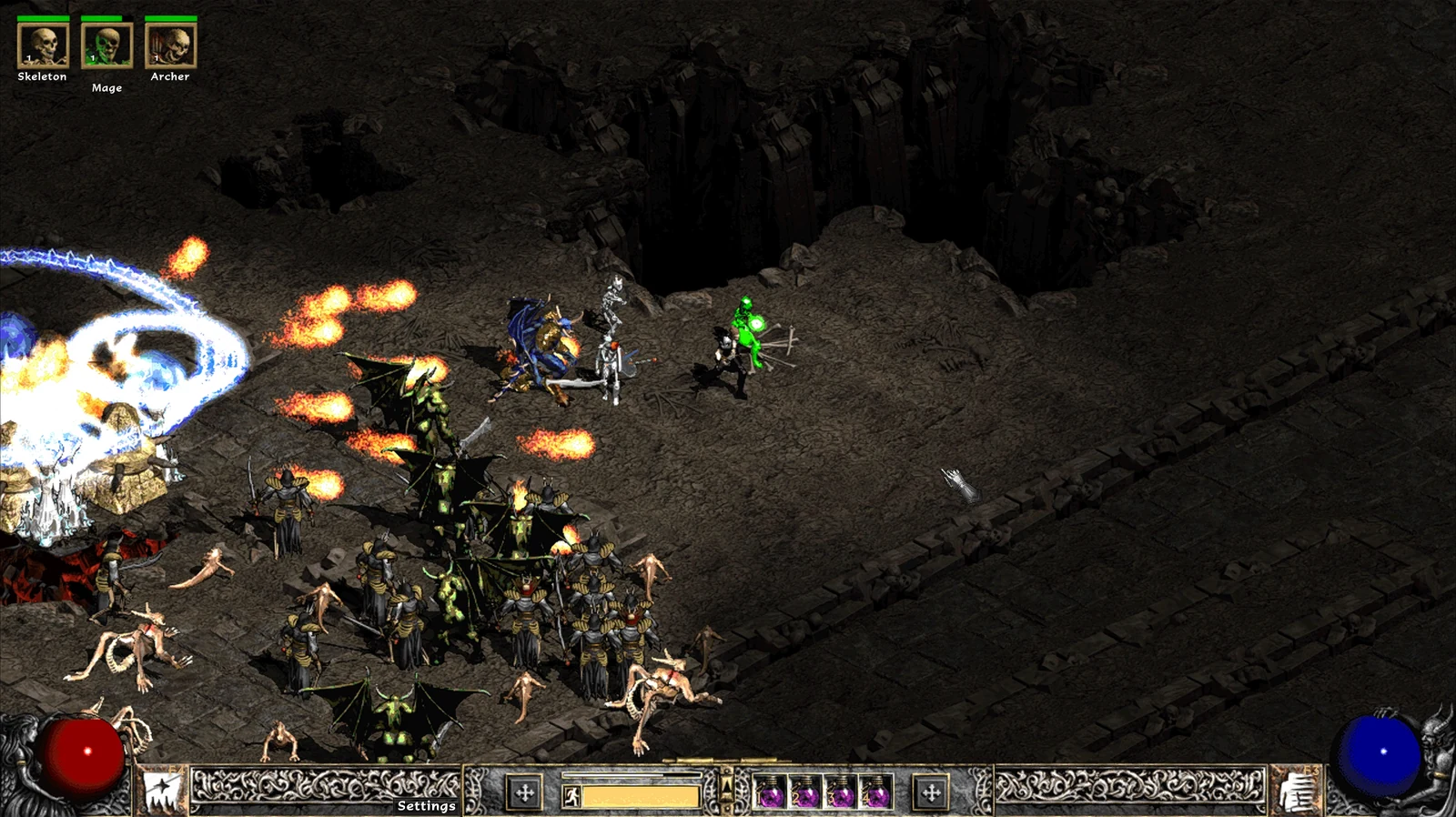
Three post-Hell difficulties extend character progression and raise enemy durability, damage and encounter pressure.
Major encounters can call reinforcements, change their rhythm and punish stationary damage races.
All classes use the Sorceress-style faster-cast progression, making casting targets easier to understand across builds.
Non-Sorceress characters gain Teleport-style movement. The Sorceress receives her natural Teleport at level 18.
Skeleton Warriors, Mages and Archers, Druid companions, Ravens and golems receive expanded scaling and control.
Summon and mercenary quality-of-life changes reduce repetitive rebuilding and keep the focus on playing.
Worldstone corruption varies by item family, quality and socket state, with rare secondary results distinguished clearly.
New equipment, set options, recipes, maps and endgame rewards create more routes towards a finished build.
The launcher keeps the installed client aligned with the current public release when the project opens.
Some of the most memorable DEV D2 moments come from seeing familiar spaces break their old rules. That is where the mod starts to feel different rather than simply harder.
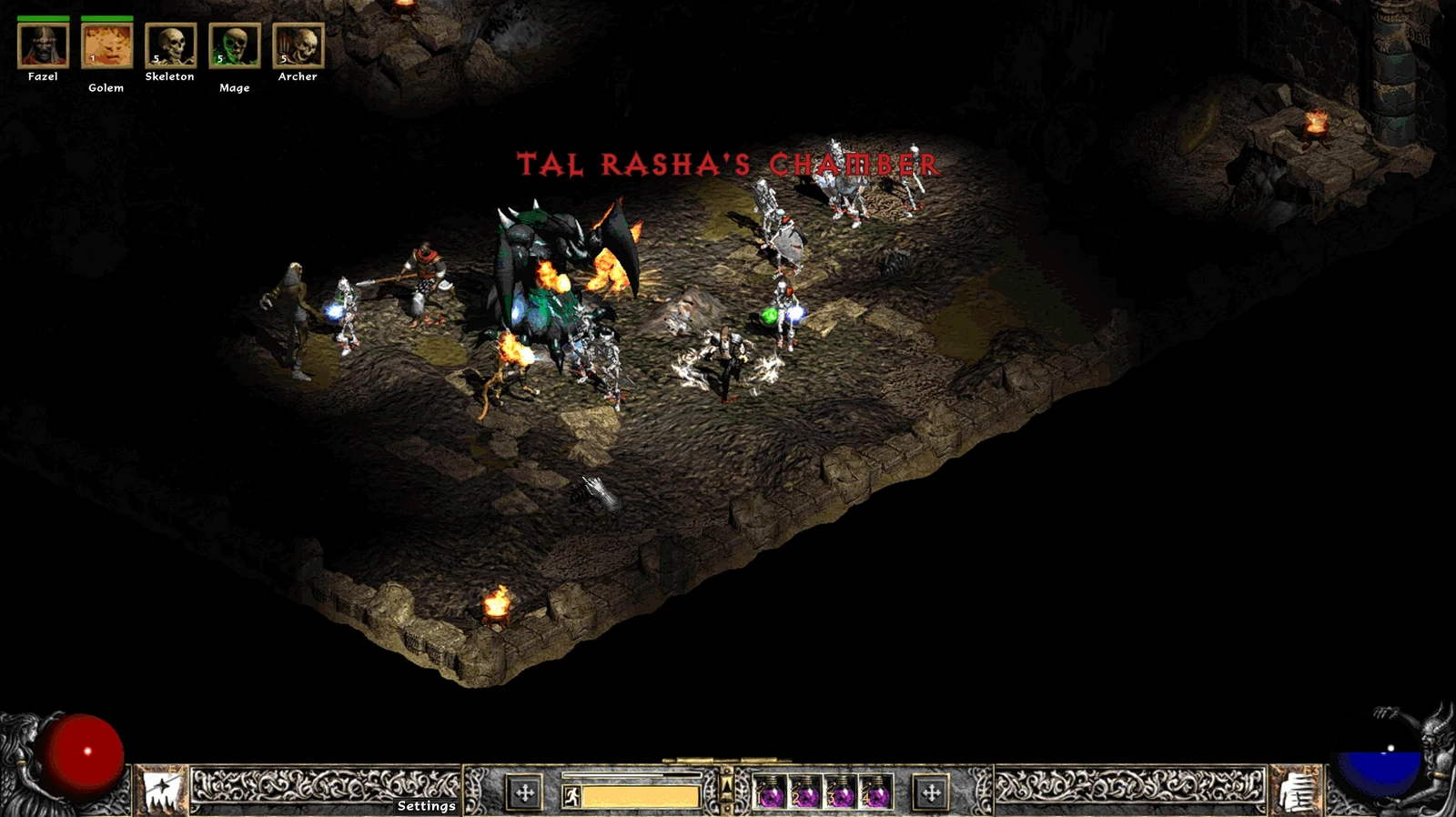
Well-known boss spaces can demand fresh positioning and more awareness than the default game trains you to expect.
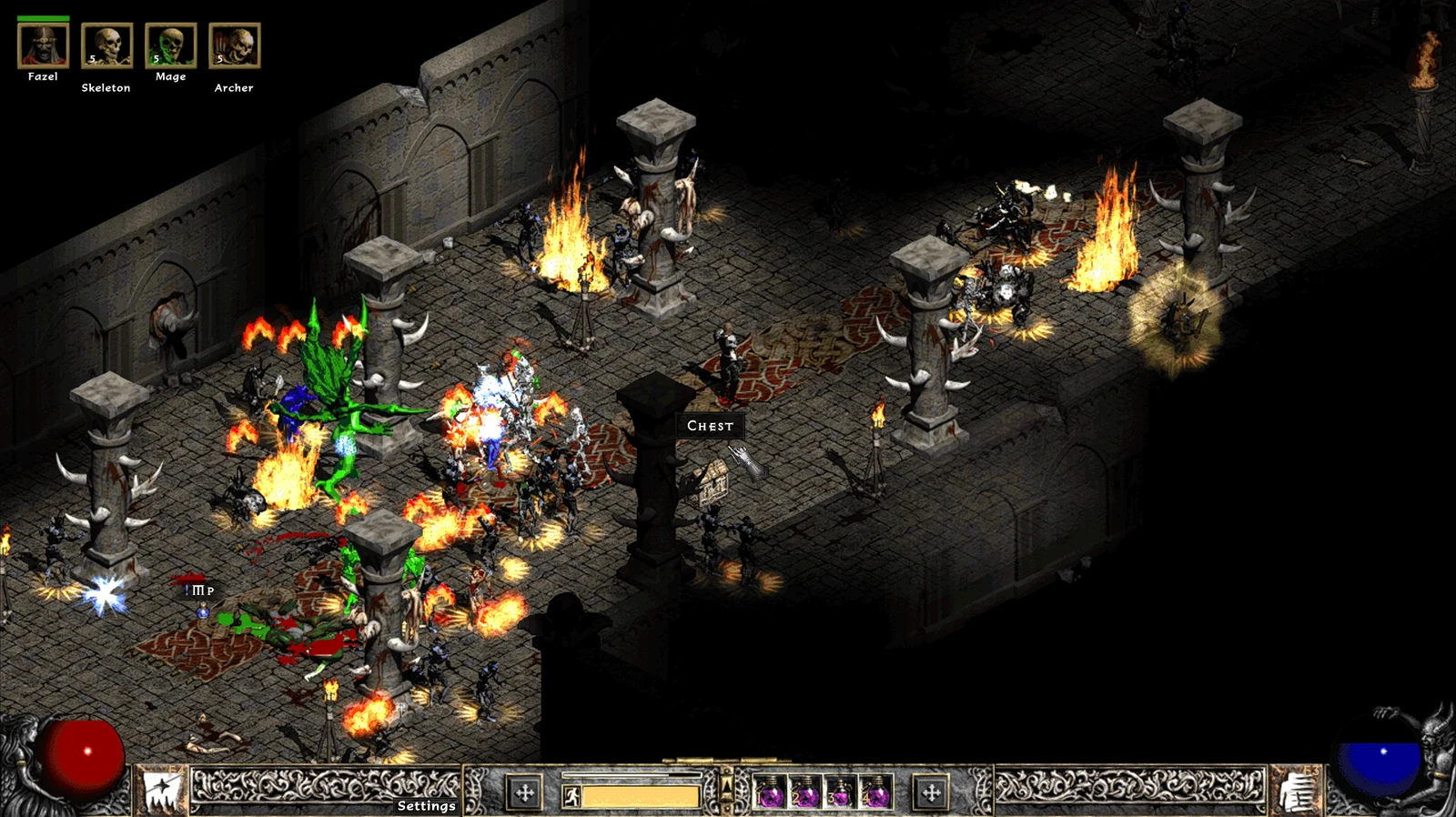
More bodies, more projectiles and more pressure make space management matter, especially for summoners and casters.
The in-game shared stash tab removes one of the oldest Diablo headaches. Levelling gear, crafting materials and build swaps can stay on your proper account instead of being parked on mule characters.
Keep your real characters at the centre of progression instead of using them as post boxes.
Move experimental gear around quickly when testing skills, corruption targets or alternate loadouts.
Useful when the item hunt gets serious and your account starts accumulating runes, bases and crafted pieces.
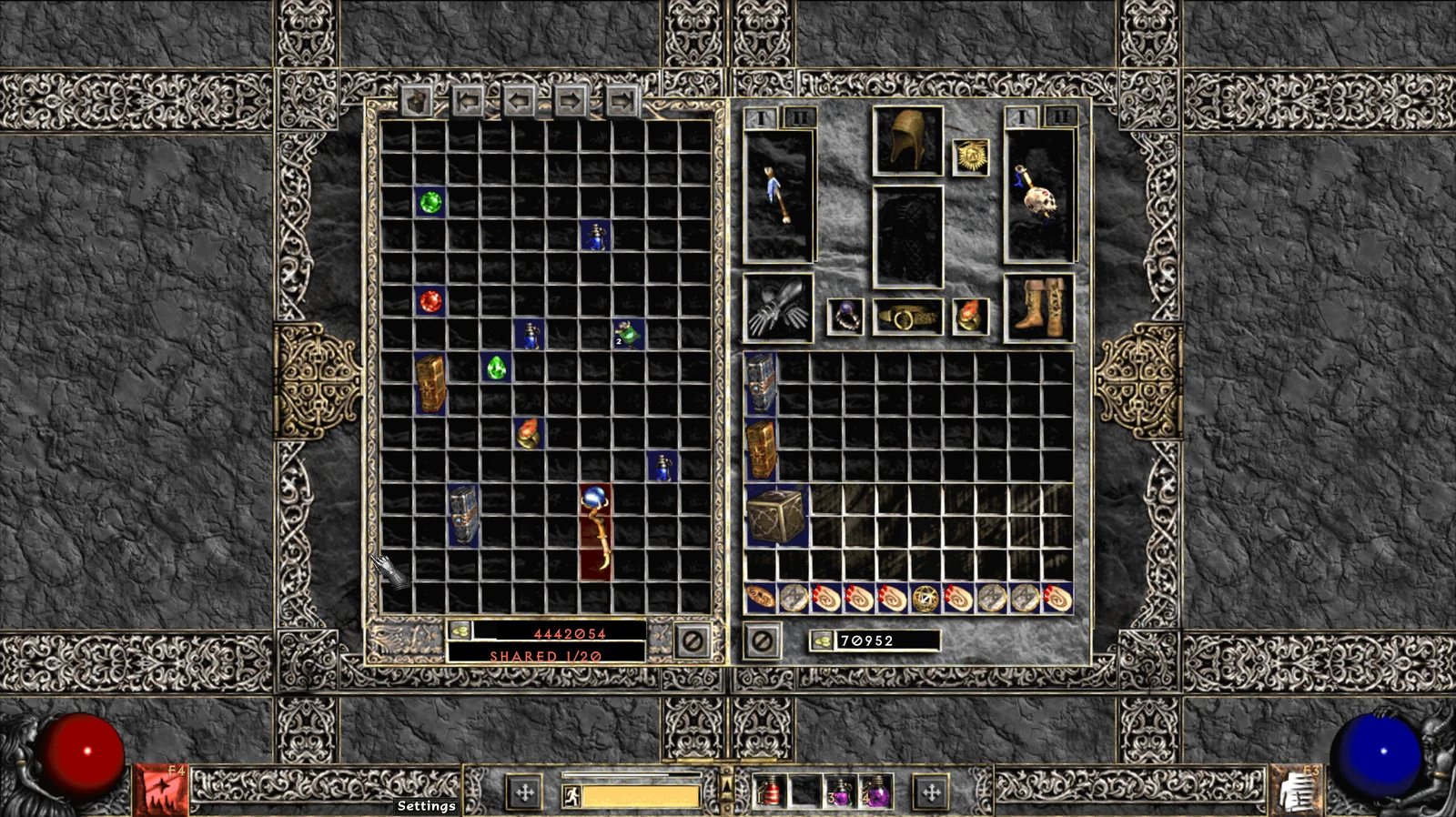
Higher difficulties combine stronger enemies with altered boss encounters, expanded character options and build systems intended to reward preparation rather than conceal how the game works.